Stabilo CarbOthello Pastel Pencils: A Budget-Friendly Choice for Vibrant Art
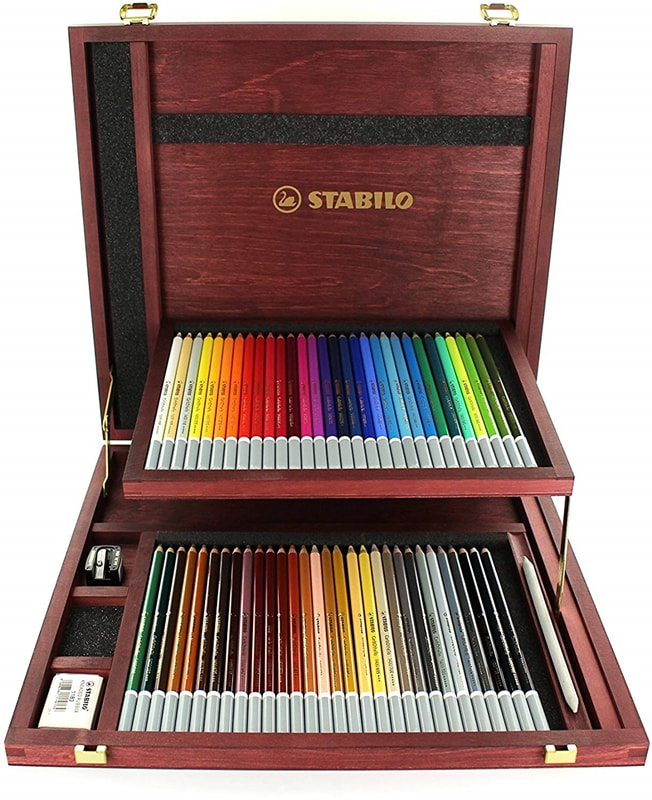
For artists seeking vibrant, cost-effective pastel pencils, Stabilo CarbOthello offers a compelling blend of quality and versatility. Renowned for their soft, blendable texture and rich hues, these pencils have become a favourite among beginners and hobbyists worldwide. Introduced in 1952 as “Coloured Charcoal,” they were designed to capture the expressive depth of charcoal within the controlled format of a pencil, a legacy that continues to resonate with creators today. With a 60-colour palette, they cater to a range of creative projects, particularly for beginners and hobbyists. But how do they measure up against brands like Faber-Castell or Caran d’Ache? This article explores their strengths, limitations, and ideal users, including their history, delivering an honest perspective on why they’re a top choice for budget-conscious artists looking to explore pastel techniques.
Core Characteristics and Performance
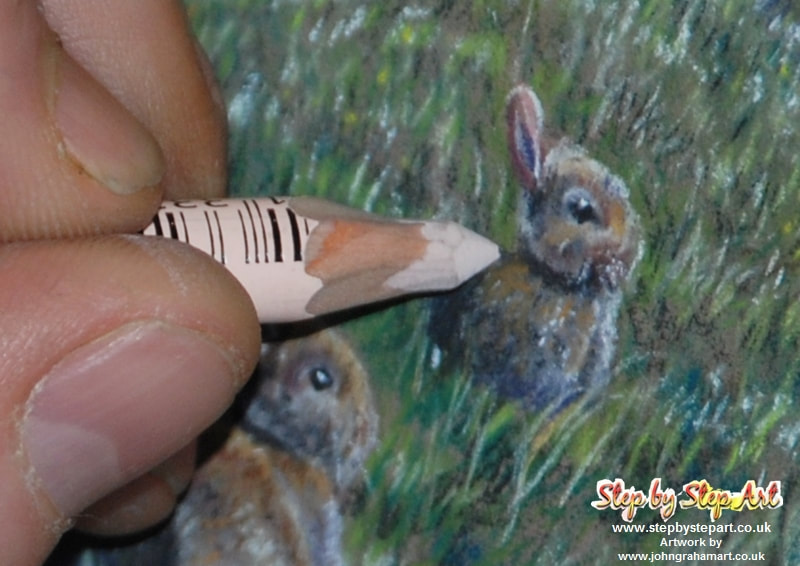
Stabilo CarbOthello pastel pencils stand out for their affordability, making them an accessible entry point for artists new to pastels or those mindful of their budget. Their global popularity reflects a balance of quality and value, appealing to students, hobbyists, and anyone eager to experiment with vibrant media without committing to premium brands. The pencils’ soft, chalk-like texture simplifies blending, allowing creators to craft seamless transitions in landscapes, portraits, or abstract works with ease. This user-friendly nature has earned them praise across art communities, positioning them as a leading option for beginners. Unlike pricier competitors, they deliver bold, expressive results that encourage creative exploration, making them a reliable choice for those starting their pastel journey or seeking a versatile tool for casual projects.
Base: Chalk-pastel |
Lead: Soft-Medium |
Colours: 60 |
Lightfast: No |
Vegan: Unlikely |
Costs: £ - ££ |
Key Features: Softness, Vibrancy, and Versatility
The defining strength of Stabilo CarbOthello pencils lies in their vivid pigmentation, which shines on dark or toned papers, producing striking visual effects that elevate drawings. Their soft lead facilitates effortless layering, enabling artists to build depth and complexity, particularly in mixed-media compositions. As water-soluble pencils, they offer the flexibility to create watercolour-like washes, broadening their appeal for experimental creators who blend techniques. The 4.4 mm core strikes a balance between precision and bold strokes, suitable for sketching details or covering larger areas, though it may not rival the sharpness of some competitors. While their powdery texture generates some dust, this is easily managed, and their adaptability across textured surfaces like Clairfontaine Pastelmat enhances their vibrancy, making them a dynamic choice for artists exploring a range of styles and mediums.
Colour Palette and Range
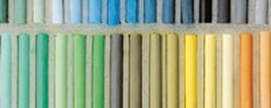
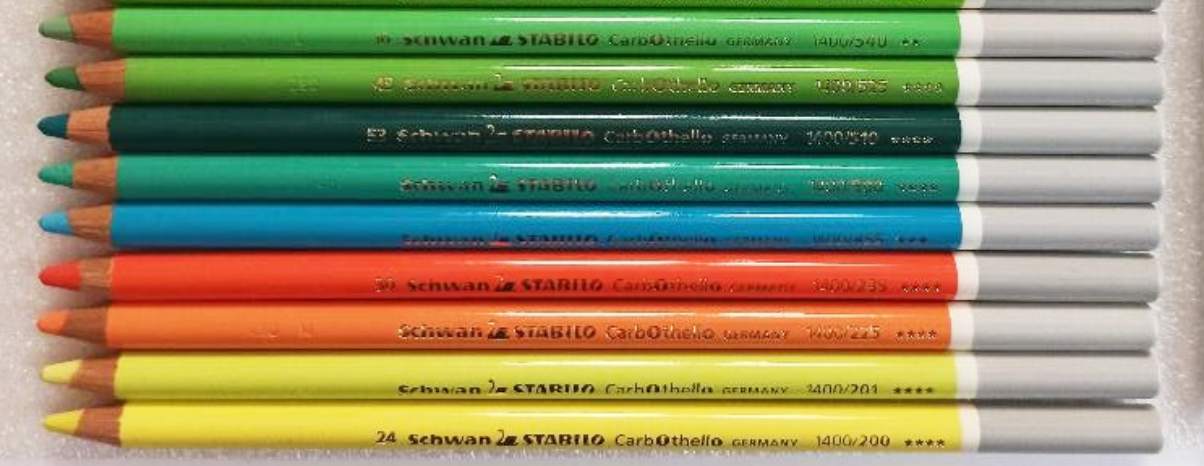
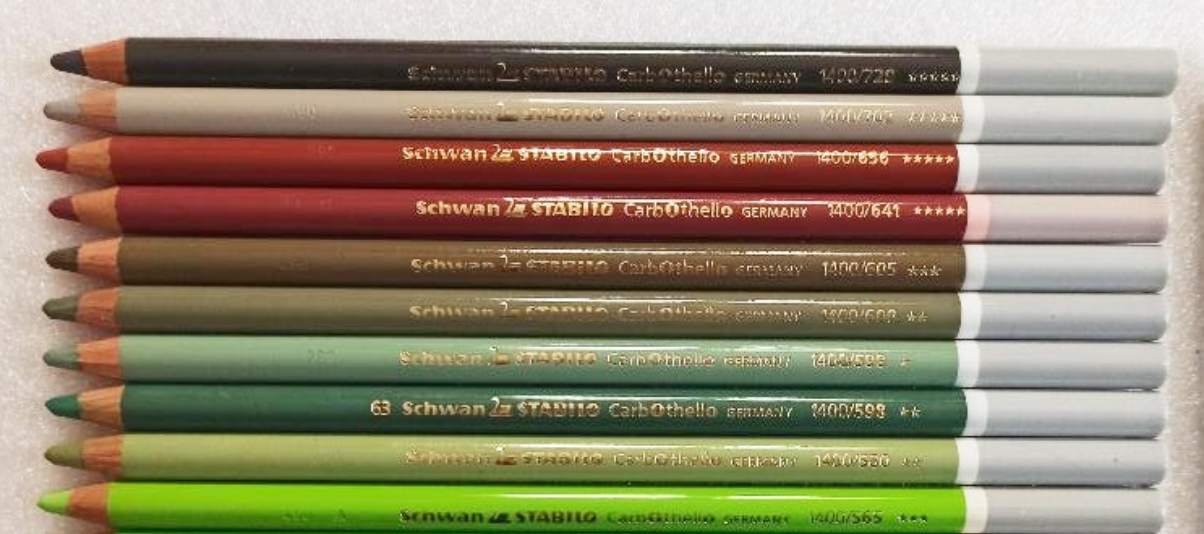
The CarbOthello line presents a thoughtfully curated palette of 60 colours, providing artists with a comprehensive range that lends itself particularly well to capturing the nuances of landscape, animal, and human portraiture. This expansive selection moves beyond mere primary and secondary hues, delving into a rich variety of tones. Artists will find a robust collection of natural and earthy shades, including diverse ochres, umbers, siennas, and bistre, which are essential for grounding compositions and rendering realistic textures. Complementing these are an extensive array of warm and cool greys, allowing for subtle tonal shifts, atmospheric effects, and the depiction of complex shadows. The greens span a wide spectrum, from vibrant leaf greens to more subdued olive and viridian matt, offering versatility for depicting diverse flora. Blues range from bright sky tones to deep Prussian and Ultramarine hues, perfect for rendering expansive skies or rich shadows. Each pencil barrel is individually marked with a star rating (from 0 to 5 stars) to indicate its lightfastness, a crucial detail for artists concerned with the archival quality and longevity of their work, although it is worth noting that certain blues, purples, and some reds may exhibit lower ratings. Only 28 of their 60 colours have high lightfastness ratings (4+ stars), with greens, pinks, and purples often criticised for fading over time, which may concern professional artists creating archival work. To assist artists in navigating the colour palette and lightfast ratings, a comprehensive handmade colour chart is available for purchase as a digital download in our shop on the Ko-fi platform.
Advantages & Disadvantages
ADVANTAGES:
STABILO CarbOthello pastel pencils offer a range of significant advantages for artists, primarily due to their unique pencil form which allows for exceptional control and fine detail, enabling sharp lines and intricate work like delicate hairs or subtle landscape features. They possess a distinct "dry and dusty" texture, akin to charcoal or chalk, providing a drier laydown preferred by many artists and facilitating unique textural effects. These pencils excel in layering and blending, allowing for the smooth build-up of multiple colours without excessive wax accumulation, and can be worked seamlessly with fingertips or blending stumps. A notable feature is their partial aquarellability; while not fully dissolving, their pigments can be activated with water and a brush to create washes or soften areas, typically retaining original contours and helping to fix the pigment. Furthermore, CarbOthellos are highly pigmented, delivering vibrant colour laydown, strong opacity, and impressive luminosity, particularly striking on darker papers. Most colours in the range boast good to excellent lightfastness, a crucial factor for archival work, and the pencils generally produce less mess than traditional pastel sticks. Completing their robust design, the 4.4mm lead is relatively strong, reducing breakage during use compared to softer pastel alternatives.
DISADVANTAGES:
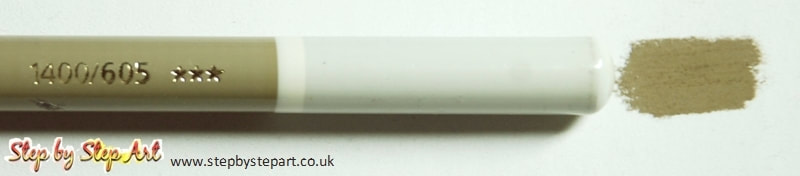
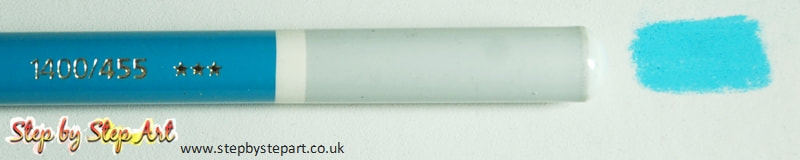
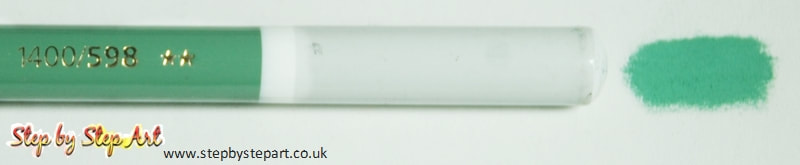
Despite their many advantages, STABILO CarbOthello pastel pencils do present a few drawbacks for artists. As a chalk-pastel medium, they inherently produce dust, necessitating adequate ventilation and precautions to avoid inhalation, particularly for individuals with respiratory sensitivities, though they are generally less dusty than soft pastel sticks. Their distinct "drier" and slightly harder texture might not suit all artistic preferences, especially for those accustomed to a very creamy, buttery soft pastel pencil desired for seamless painterly effects or effortless opaque coverage, and they may not intermix as readily with softer, waxier brands in layered applications. While these pencils generally sharpen well, maintaining a very fine, long point can be challenging due to the pastel core's inherent softness, making heavy pressure problematic and often recommending the use of a sharp blade or high-quality sharpener to prevent breakage. Furthermore, like all pastels, finished artwork is prone to smudging and requires a fixative for protection, which carries the risk of slightly altering or darkening colours. A practical inconvenience lies in the metallic writing on the barrel, which can be difficult to read, especially the crucial colour number and lightfastness rating, particularly in poor lighting or as the pencil wears. Finally, the reliance solely on colour numbers rather than specific names on the barrel can necessitate frequent consultation of a colour chart for easy identification, which may be a minor hindrance for some users.
How Stabilo CarbOthello Pastel Pencils Compare to other Pastel Pencil Brands
In a highly competitive and continually evolving art materials market, where artists frequently weigh their options among a broad spectrum of professional pastel pencil lines from esteemed manufacturers like Faber-Castell Pitt, Caran d'Ache, and Derwent, each celebrated for their unique strengths and contributions to diverse artistic practices, STABILO CarbOthello pencils distinctly carve out their own particular niche, inviting a closer examination of the attributes that truly set them apart from their contemporaries in the world of fine art supplies. To gauge CarbOthello’s popularity, next, we'll compare them to other leading pastel pencil brands.
- Faber-Castell Pitt Pastel Pencils are highly regarded, particularly among artists who prioritise precision and durability. They are frequently mentioned alongside CarbOthello in reviews and are popular for their firmer core, which allows for sharper lines and fine details, making them a favourite for portrait and pet artists. Pitt pencils are less soft than CarbOthello, producing less dust but also less creamy application. They don’t layer as well over soft pastels or PanPastels compared to CarbOthello, which excels in layering. Pitt pencils are pricier, but have better lightfastness across their range.
- Caran d’Ache Pastel Pencils are considered a premium brand, with a reputation for rich, vibrant colours and a comprehensive 84-colour range, the largest among leading pastel pencil brands. They are popular among professional artists who value lightfastness and colour variety but are less common among beginners due to their high cost. Caran d’Ache pencils are softer than Pitt but similar to CarbOthello in texture, though they blend with a creamier feel. They are less prone to breakage than CarbOthello but require careful sharpening with a blade. Their luxury status and price make them less accessible, reducing their widespread use compared to Stabilo.
- Derwent Pastel Pencils have a solid following, particularly in the UK, with a 72-colour range and a reputation for vibrant colours. They are moderately popular but less frequently mentioned than Stabilo or Faber-Castell in beginner-focused reviews. Their price point is higher than Stabilo, and they are criticised for not sharpening well with mechanical sharpeners. Derwent pencils are similar in softness to CarbOthello and layer comparably well, but their colour range is slightly larger. They are less dusty than CarbOthello, which some artists prefer, but their higher cost and sharpening issues may deter some users.
- Conte a Paris Pastel Pencils are well-known, especially among artists who work on toned or textured papers. They have a smaller colour range (around 48 colours) and a larger lead diameter (5mm vs. CarbOthello’s 4.4mm), which some find less versatile. They are popular for their chalky consistency and minimal breakage when used with the right sharpener. Conte pencils are harder than CarbOthello, producing less smudging but a grittier application. They blend well with fingers and work effectively on various papers, but their smaller colour range limits their appeal compared to Stabilo.
- Koh-i-Noor pastel pencils are less prominent in the art community but have a niche following due to their excellent layering ability and softness, similar to CarbOthello. They are less widely available and have a smaller colour range, which limits their popularity. Koh-i-Noor pencils outperform CarbOthello in layering tests on unsanded paper, but their pigment vibrancy is comparable. They are softer and more fragile, making them less practical for some artists. Their lower visibility in retail and online reviews suggests they are less popular.
History of the Stabilo CarbOthello Pastel Pencils
The Vintage 'Swan Carb-Othello' Pastel Pencil Design
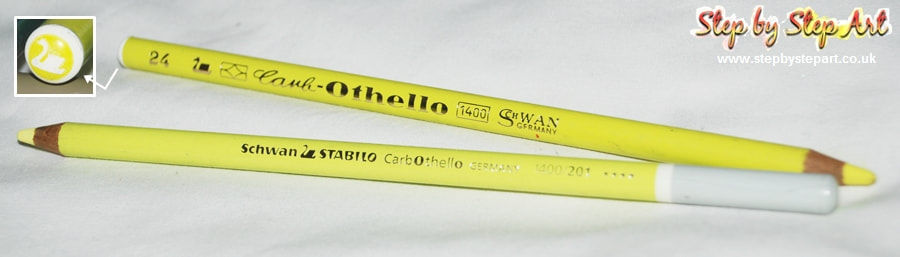
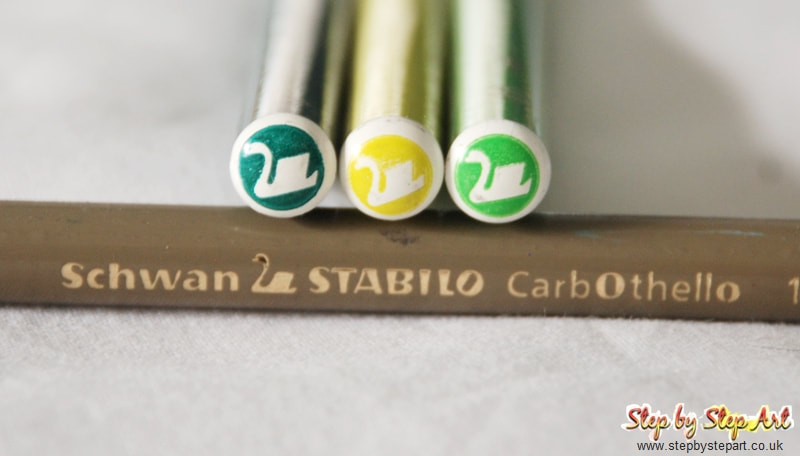
The STABILO CarbOthello pastel pencil, first introduced in 1952, began its life with a more descriptive, yet less poetic, name: 'Coloured charcoal'. This initial designation accurately reflected its unique dry, dusty texture, mimicking traditional charcoal within a controllable pencil format. During this early period, the branding on the pencils and packaging often featured the "Swan" name prominently, directly referencing Schwan-STABILO, the parent company whose identity has been intertwined with the swan emblem since the mid-19th century. This is why these vintage pencils are often recalled as "Swan Carb-othellos".
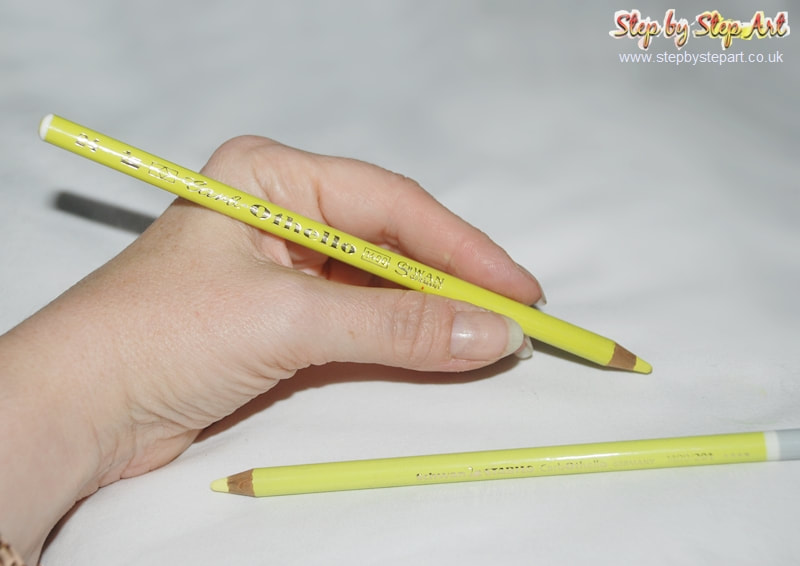
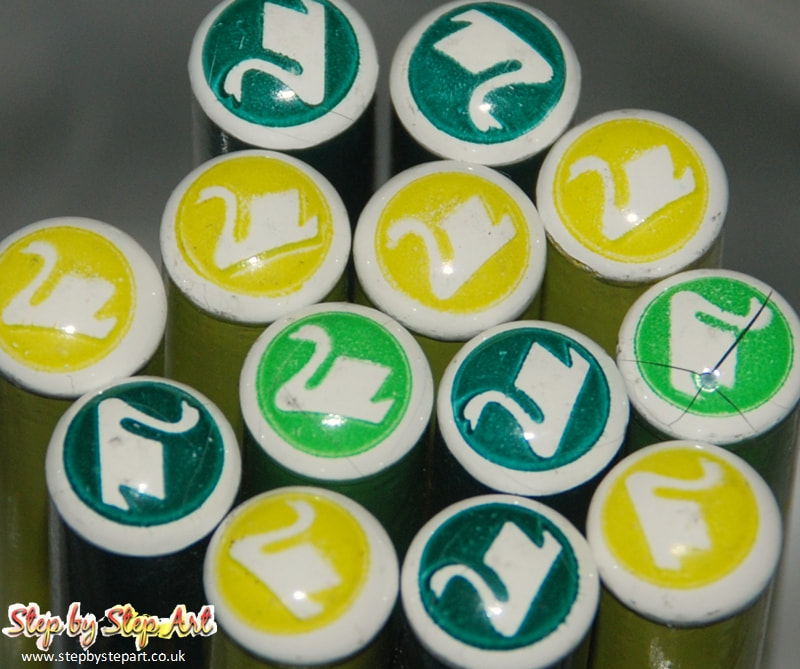
Early 'Schwan Carb-Othello' sets indicated availability in 60 colours, suggesting this was a well-established range from an early stage in the product's history. These vintage pencils are also notable for the unusual orientation of their barrel text, which appears legible when held in the left hand. This design, likely a result of mid-20th-century European manufacturing conventions and display practices, differed from the modern standard where text is typically upright when held in the right hand. The addition of the iconic Swan emblem placed at the barrel end further distinguished these early pencils, serving as both a visual signature and a direct nod to the brand's enduring heritage.
The Vintage 'Schwan Stabilo CarbOthello Professional line' Pastel Pencils
The 'Schwan Stabilo professional line,' which encompassed CarbOthello as well as other professional-grade graphite and coloured pencils, likely began rolling out in the mid-to-late 1980s, though a definitive start date for the entire line is not documented online. This strategic designation, prominently featured on vintage tins, signified the product's status as a high-quality tool for discerning artists. It was likely during this 'professional line' period, extending into the 1990s, that the CarbOthello range saw a temporary expansion, reaching 72 colours, as evidenced by existing sets.
Notably, at least 19 colours from this 72-set are now discontinued and no longer available in the current range making them highly sought after by collectors and rare to find. Over the extensive period of the pencils' production, colours are periodically discontinued or replaced due to various factors such as pigment availability, evolving environmental regulations, or shifting market preferences. Thus, while 19 colours from the 72-set are now absent, it's more probable that these were replaced within the 72-colour collection rather than indicating a total palette exceeding 72; indeed, the complete historical spectrum of CarbOthello shades may be far broader than currently documented, with many more undiscovered colours existing throughout its long production history. This illustrates a dynamic evolution of the colour palette, with the range adapting to meet professional demands before eventually settling back to the familiar 60-colour collection widely available today.
Decoding Vintage CarbOthello: Colours and the Early Numbering Convention
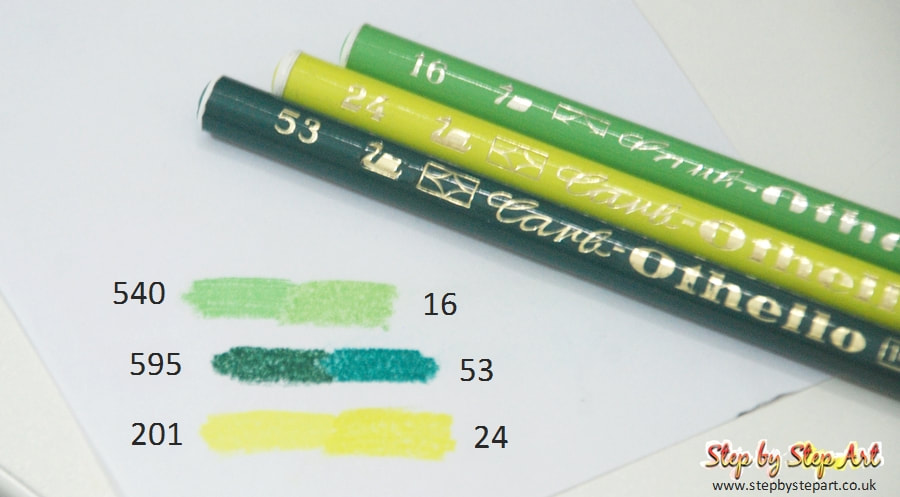
For collectors and enthusiasts who still possess these legacy Schwan/Swan Carb-Othello pencils, understanding their original numbering system and colour count can be particularly insightful. A compilation revealing the older names and their distinctive two-digit numbers has surfaced, representing the range of colours available during that period. While the official colour count for these vintage sets was 60 distinct hues, a complete list of individual pencils might extend to 62 due to the inclusion of Black Carbon No. 46, which was offered in three different grades (1, 2, and 3). These grades, while providing variations in intensity or hardness, were typically considered iterations of one colour within the overall palette, rather than three separate colours. Many of these vintage pigments appear to align with shades found in today's three-digit numbered collection, and this comprehensive list serves as a valuable reference for identifying and appreciating the historical range of these vintage art materials.
|
|
|
|
Conclusions
The STABILO CarbOthello pastel pencil has cemented its unique place in the art world, proving its enduring relevance to artists today. Far from being a mere relic of its long history, these pencils remains a steadfast choice for those who value its singular contribution to detailed pastel work. Their particular texture appeals to those seeking effects akin to charcoal or chalk, while their strong pigmentation and partial water-solubility open up diverse creative avenues. Ultimately, the CarbOthello stands as a testament to thoughtful design and lasting quality, remaining a beloved tool for artists across generations.
|
STABILO states that no direct animal-derived raw materials, such as meat or fat, are used in the research, development, or manufacture of their CarbOthello pencils. While they predominantly use renewable plant-derived ingredients, the company cannot definitively guarantee that all raw materials are exclusively vegan throughout their supply chain. Therefore, despite avoiding obvious animal products, these pencils are generally not classified as 100% vegan. |